
Overview
Parflow Monoflange Valves are engineered to simplify process instrument installations by integrating multiple valve functions into a single compact body. Designed as a modern alternative to conventional valve assemblies, Monoflange valves combine process isolation, venting, draining, and instrument interface functions into one precision-engineered unit, significantly reducing installation space, weight, and potential leak paths.
In traditional instrumentation installations, pressure transmitters, pressure gauges, and other process instruments are connected using several individual components: including block valves, bleed valves, nipples, fittings, and flanges. While effective, these assemblies increase the number of threaded and flanged joints, resulting in larger installation footprints, longer installation times, higher weight, and more potential sources of leakage.
Parflow Monoflange Valves eliminate these challenges by replacing complex multi-component assemblies with a single integrated valve body. The result is a cleaner, safer, and more efficient installation that improves system reliability while simplifying maintenance throughout the life of the plant.
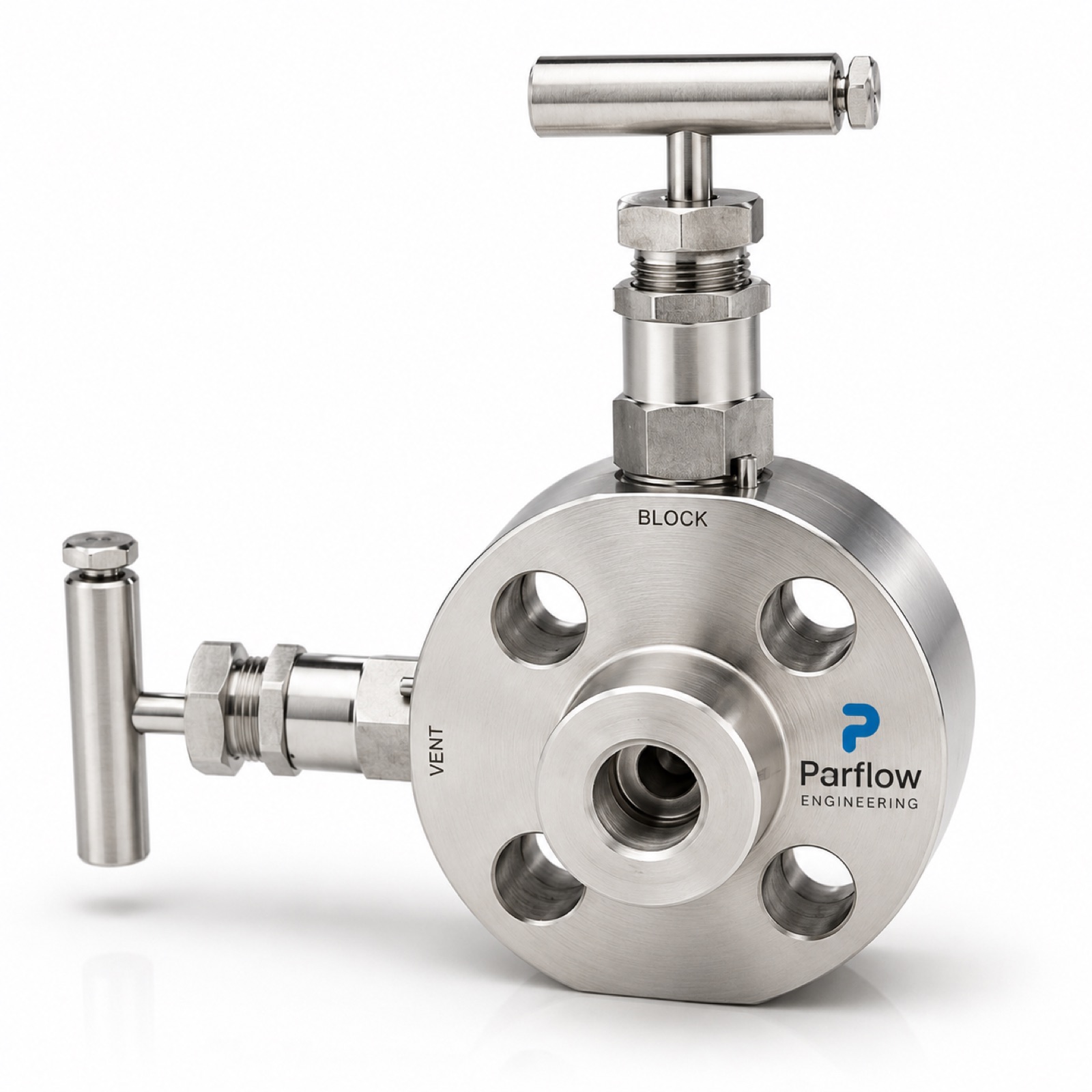
Working principle
The monoflange is the primary interface between pipeline and instrument. In operation, its isolation valve passes process pressure to the instrument. For maintenance, the isolation valve closes and the integrated vent releases trapped pressure so the instrument can be removed, calibrated, or replaced safely.
The forged monoblock body carries all flow passages internally: fewer external joints, excellent resistance to vibration and thermal stress, and a compact envelope suited to offshore platforms and dense skids.
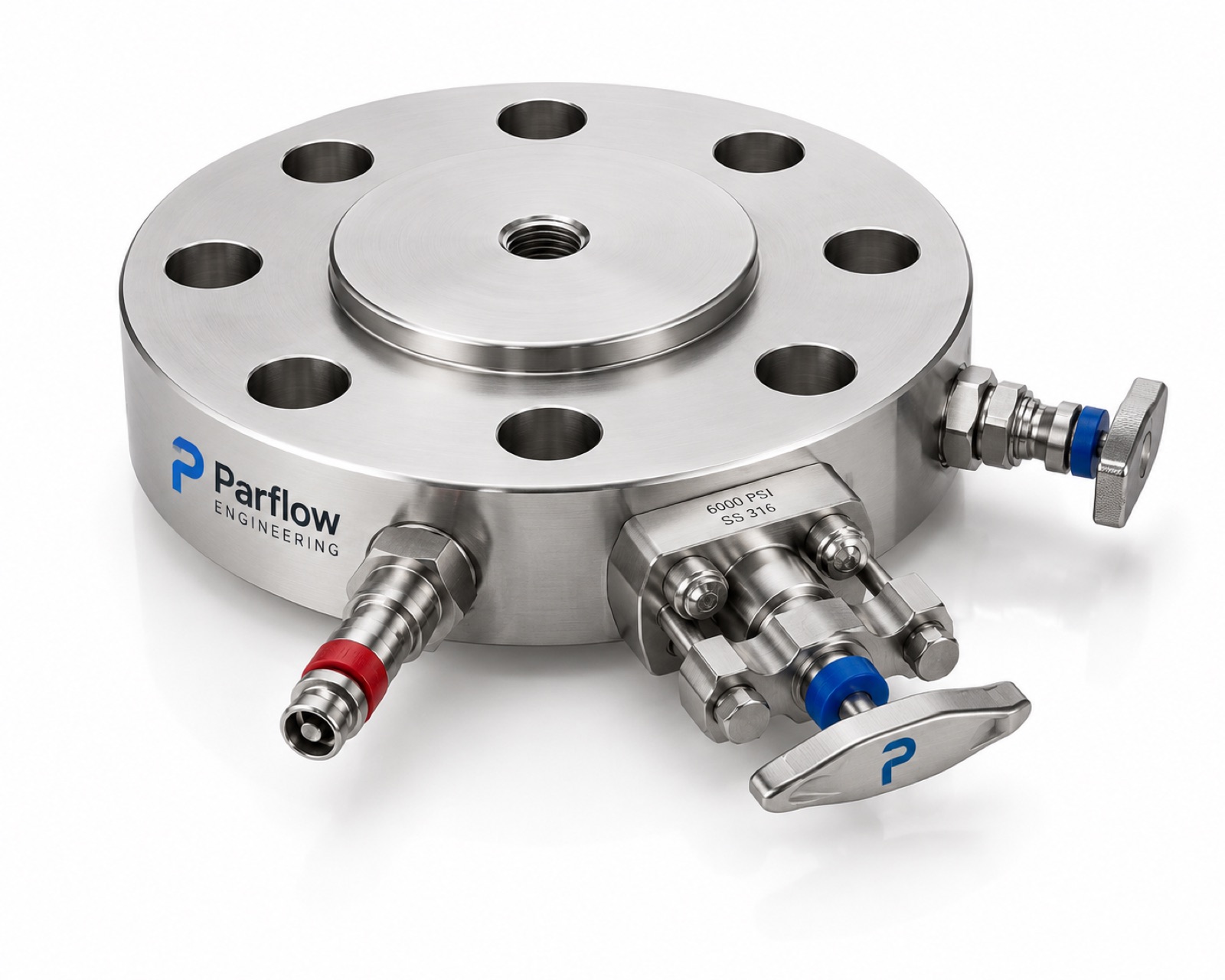
At a glance
A monoflange carries the isolation and bleed functions of a built-up hook-up in one forged body, so it has to hold the pressure the separate parts used to. At 10,000 psi it sits with the Double Block & Bleed valves, not with the 6,000 psi manifold range.
Three configurations are offered, and they are not interchangeable:
- Single Block, primary isolation only
- Double Block & Bleed, two isolations with the bleed between them
- Instrument Isolation, isolation at the instrument connection
All three use the same single-piece forged body, integrated bleed/vent valve, and 1/2"–1" flanged process connection, so the choice is about the isolation scheme your procedure requires, not about the envelope. Temperature limits follow the seat and packing material you specify (PTFE, PEEK or metal seat; PTFE or graphite packing).
Key features
- Integrated forged monoblock construction
- Isolation + vent in a single flange-mounted body
- Major reduction in footprint and system weight
- Fewer threaded and flanged connections: fewer leak paths
- High-pressure instrumentation capability
- Improved rigidity vs assembled hook-ups
Technical advantages
The primary advantage of a Monoflange Valve lies in its ability to simplify instrument installations without compromising safety or performance. Replacing numerous valves, fittings, nipples, and adapters with a single integrated valve substantially reduces installation time while improving overall system reliability. Fewer mechanical joints reduce opportunities for leakage, minimize maintenance requirements, and contribute to lower fugitive emissions.
The compact forged construction reduces weight imposed on process piping and instrumentation, an important consideration in offshore installations and modular process systems where structural loading must be minimized. Maintenance procedures are also simplified. Operators can safely isolate and depressurize instrumentation using the integrated valve arrangement without dismantling complex piping assemblies.
This reduces maintenance time while improving plant availability and operational safety. The streamlined installation also provides a cleaner, more professional instrument layout that improves accessibility for inspection, servicing, and future modifications.
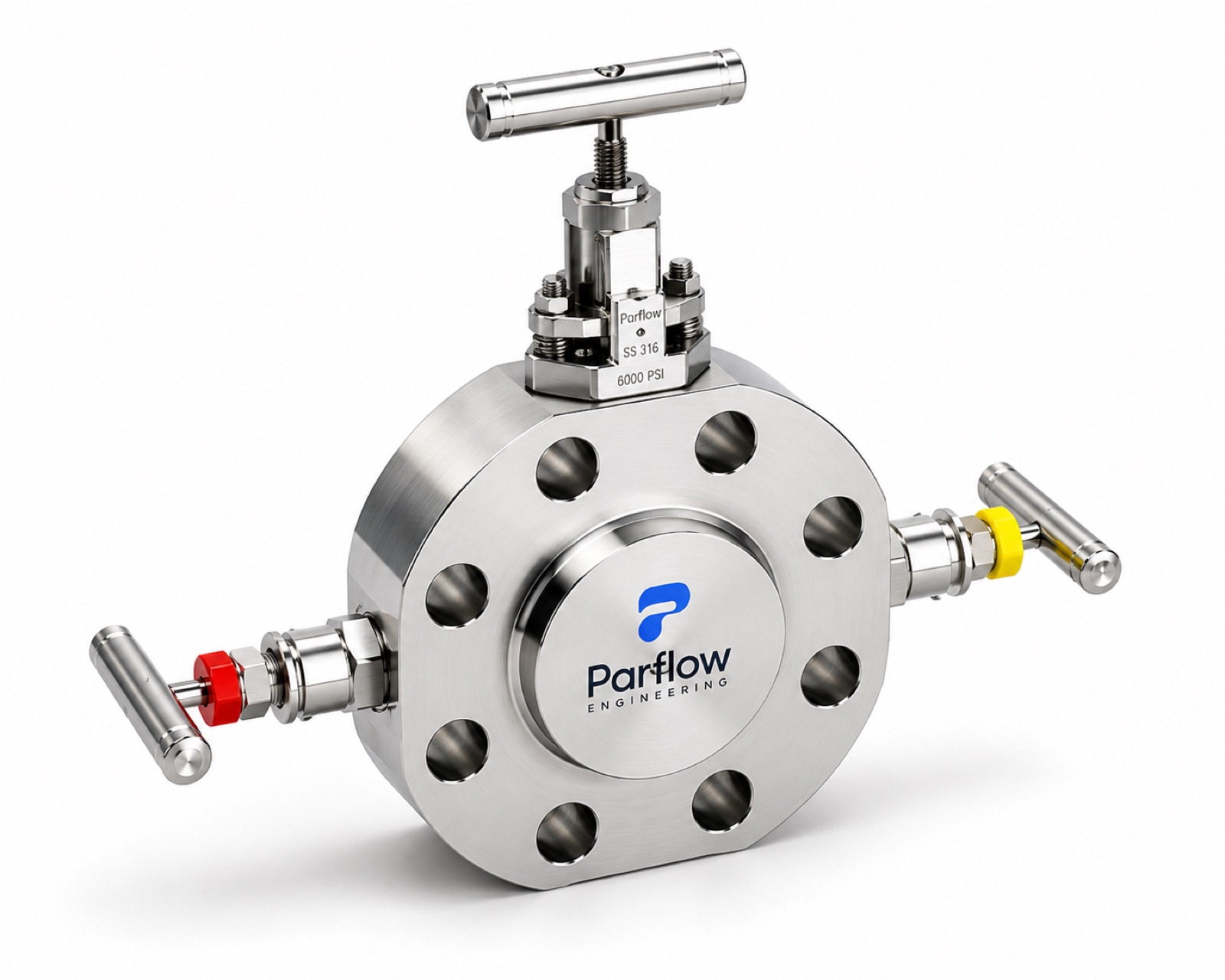
Applications
- Pressure transmitter & gauge installations
- Flow measurement systems
- Instrument impulse lines
- Wellhead instrumentation
- Chemical injection skids
- Custody transfer systems
- Offshore production facilities
- OEM instrumentation packages
Configurations
- Single block & bleed
- double block & bleed
- instrumentation-interface configurations; threaded
- flanged
- or tube fitting connections; mounting patterns for direct transmitter
- gauge
- or pipework installation
Industries served
- Oil & Gas
- Petrochemical
- Refining
- Chemical Processing
- LNG & Industrial Gas
- Offshore Production
- Power Generation
- Hydrogen Energy
- Marine & Offshore
- Mining & Metals
Why choose Parflow
Instrumentation systems are expected to deliver accurate process measurements while remaining safe, compact, and easy to maintain. Traditional valve assemblies often achieve these objectives at the cost of increased complexity, additional components, and a greater number of potential leak paths. Parflow Monoflange Valves offer a more efficient approach. By integrating multiple valve functions into a single precision-engineered body, they simplify installation, reduce maintenance requirements, improve structural integrity, and enhance overall process safety.
Designed for engineers who value reliability, efficiency, and intelligent system design, Parflow Monoflange Valves provide a high-integrity solution for modern instrumentation systems where space optimization, operational safety, and long-term performance are critical.
FAQ
What is a monoflange valve?
A compact forged valve body that flange-mounts between process and instrument, integrating isolation and vent/bleed functions that conventionally require several separate valves and fittings.
Monoflange vs conventional hook-up?
A conventional installation chains block valves, bleed valves, nipples, and adapters, every joint a potential leak path. A monoflange does it in one body: smaller, lighter, stiffer, and with far fewer places to leak.