
Overview
Instrumentation valves are fundamental to the safe, reliable, and efficient operation of industrial process plants. They regulate, isolate, divert, and protect the flow of process media within instrumentation systems, ensuring that pressure, flow, and analytical measurements remain accurate throughout the operating life of the plant. From a single pressure gauge to a complex process control skid, the performance of every instrumentation system depends on the integrity of the valves installed within it.
The Parflow range of Instrumentation Valves has been developed to meet the demanding requirements of modern process industries, where precision, reliability, and operational safety are critical. Engineered for use in high-integrity fluid and gas systems, Parflow instrumentation valves combine robust mechanical construction with precision machining to deliver dependable performance across a wide range of operating conditions.
Working principle
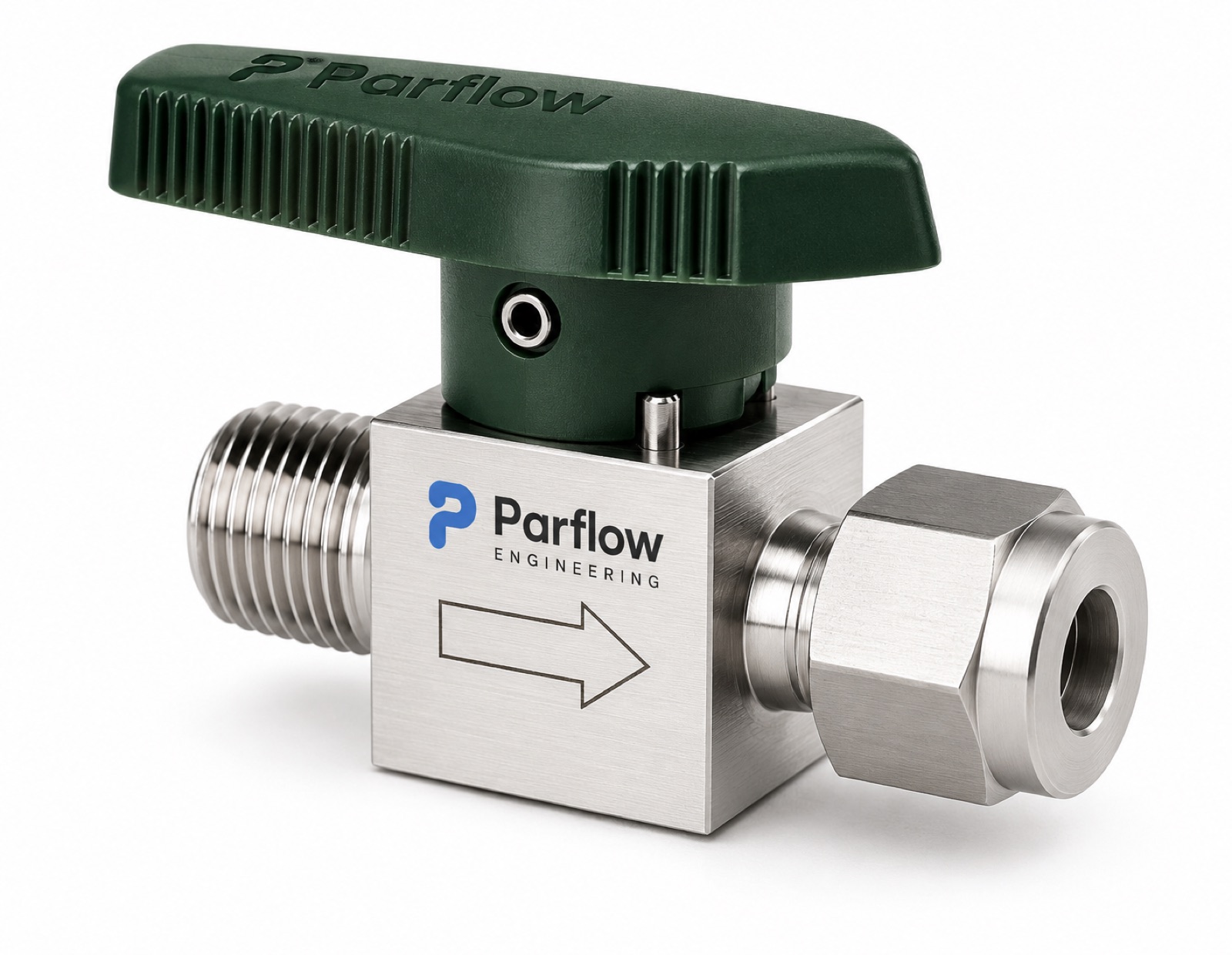
Each valve type is engineered around its function: needle valves convert multi-turn stem rotation into fine flow regulation; ball valves rotate a bored sphere 90° for positive isolation; check valves respond automatically to differential pressure; high-pressure valves hold metal-to-metal shut-off under elevated loads.
Across the range, precision-machined seats, stems, and packing systems deliver repeatable shut-off, smooth operation, and controlled movement through years of service cycles.
At a glance
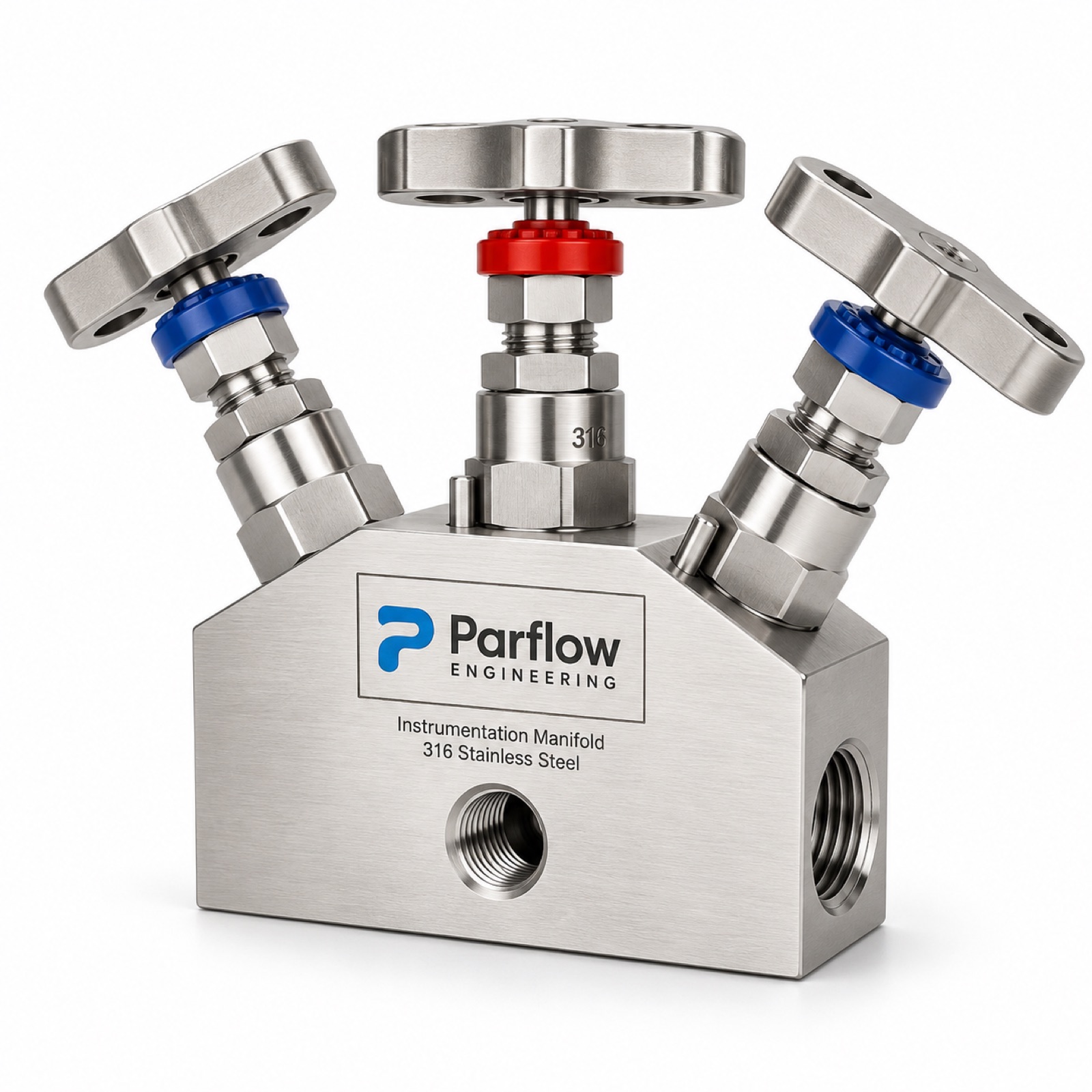
This page covers the portfolio, so it carries no single pressure rating, the number you specify to comes from the valve type you pick. The six types split into a 6,000 psi group and a 10,000 psi group, and each covers a different slice of the 1/8" to 2" size range.
Needle, DBB and Monoflange reach 10,000 psi; ball, check and manifold valves stop at 6,000 psi. For the widest size coverage at either ceiling, ball and check valves run the full 1/8" to 2"; manifold valves are the narrowest at 1/4" to 1/2". Above 10,000 psi the portfolio does not apply, that is High Pressure Valves, rated to 60,000 psi.
Key features
- Reliable isolation and flow control across diverse process applications
- Gas, liquid, hydraulic, and pneumatic service
- Robust sealing systems for leak-tight performance
- High resistance to pressure cycling and vibration
- Compact designs for instrumentation installations
- Multiple valve configurations per application requirement
Technical advantages
The effectiveness of an instrumentation valve is determined not only by its ability to control flow but also by its ability to maintain performance throughout years of continuous operation. Parflow Instrumentation Valves are designed to provide dependable sealing, controlled operation, and long-term reliability under challenging industrial conditions. Precision manufacturing reduces operating friction while improving repeatability, allowing valves to perform consistently during routine operation as well as repeated maintenance cycles.
Robust construction enables the valves to withstand vibration, pressure fluctuations, and demanding process conditions while maintaining sealing integrity. Their compact design simplifies installation in congested instrumentation panels and process skids, where space is often limited. Because each valve is engineered for its intended application, engineers can select the most appropriate valve type for isolation, throttling, pressure control, or backflow prevention without compromising system performance.
Applications
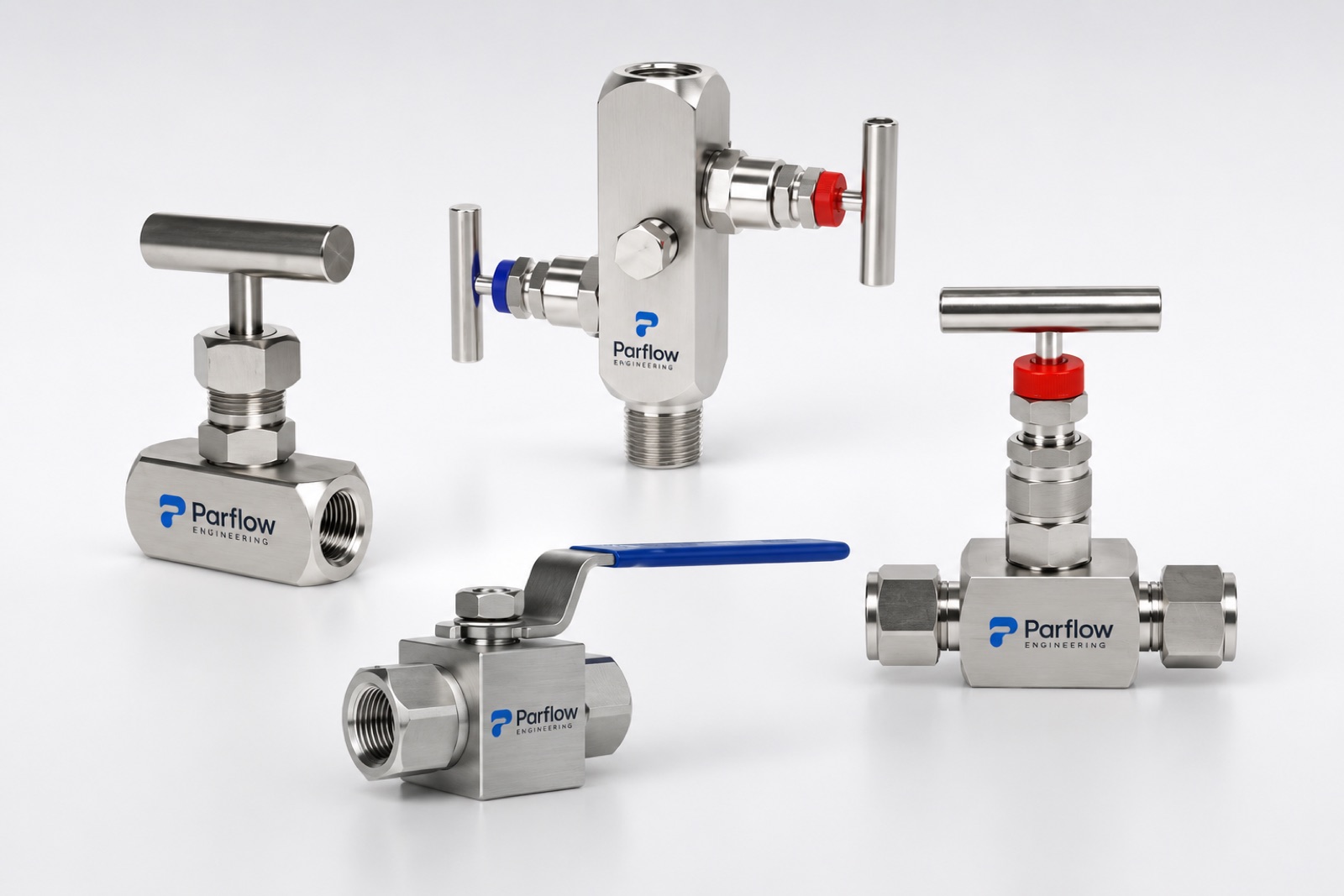
- Instrument impulse lines
- Pressure measurement systems
- DP transmitters
- Process analyzers & sampling systems
- Hydraulic control circuits
- Chemical injection systems
- Calibration equipment
- Process skids & compressor packages
Configurations
- Needle
- ball
- check
- high-pressure valve types in multiple end connections
- body patterns
- pressure classes: selected per isolation
- throttling
- or protection duty
Industries served
- Oil & Gas
- Petrochemical
- Chemical Processing
- Refining
- Power Generation
- Pharmaceutical
- Biotechnology
- Semiconductor
- LNG & Industrial Gas
- Marine & Offshore
Why choose Parflow
Instrumentation valves play a vital role in maintaining process integrity, protecting critical equipment, and ensuring accurate measurement throughout industrial facilities. Their performance directly affects operational safety, maintenance efficiency, and overall plant reliability. Parflow Instrumentation Valves are engineered to meet these demands through precision manufacturing, application-focused design, and dependable mechanical performance.
Whether used for isolation, flow regulation, pressure management, or system protection, each valve is designed to integrate seamlessly into modern instrumentation systems while delivering the reliability expected in critical industrial environments. With a comprehensive portfolio covering multiple valve types and applications, Parflow provides engineers, system integrators, OEMs, and process operators with dependable flow control solutions designed to support safe, efficient, and reliable plant operation.
FAQ
Which valve type do I need for instrument isolation?
For fast on/off isolation use a ball valve; for gradual isolation with throttling capability use a needle valve; for automatic backflow protection use a check valve; for severe pressure service use a high-pressure valve.
What functions do instrumentation valves perform?
They protect sensitive instruments, isolate equipment for maintenance, regulate process variables, prevent reverse flow, and enable safe commissioning and shutdown, beyond simply opening and closing a flow path.