
Overview
Parflow High Pressure Valves are designed for the most demanding instrumentation and process applications where conventional valves are unable to withstand the mechanical stresses imposed by elevated operating pressures. Engineered for reliable isolation, precise flow control, and long-term sealing integrity, these valves provide dependable performance in high-pressure fluid and gas systems operating under severe service conditions.
Across industries such as oil & gas, petrochemicals, chemical processing, hydrogen, power generation, and research laboratories, high-pressure systems are integral to critical operations including chemical injection, hydraulic power, gas handling, pressure testing, and process control. In these applications, every valve represents a vital safety component. A failure at high pressure can result in equipment damage, production losses, environmental hazards, and significant safety risks.
Parflow High Pressure Valves are engineered to meet these challenges through precision machining, robust body construction, and carefully designed sealing mechanisms that maintain performance under demanding operating environments. Built for reliability rather than compromise, they provide engineers with confidence in applications where process integrity is paramount.
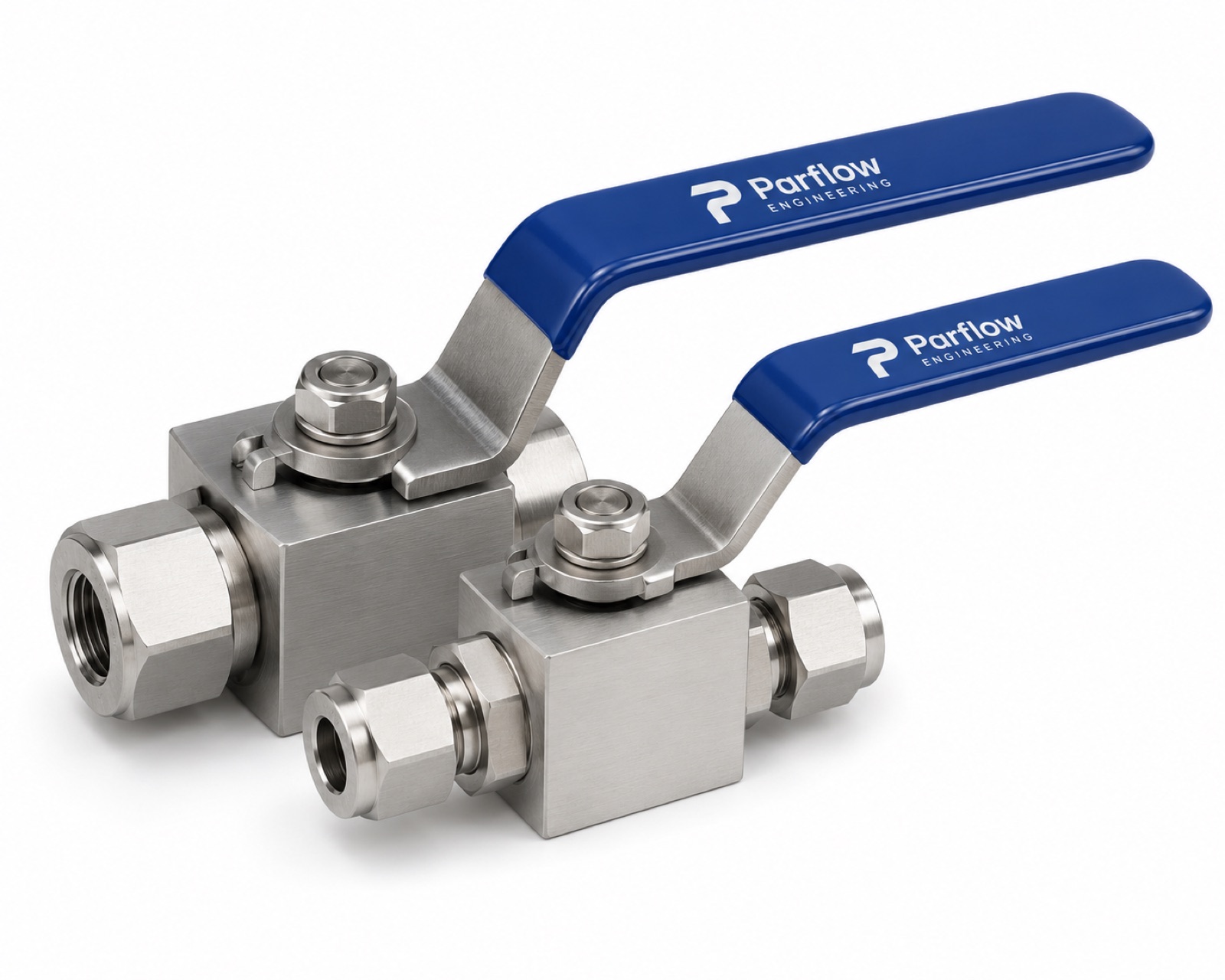
Working principle
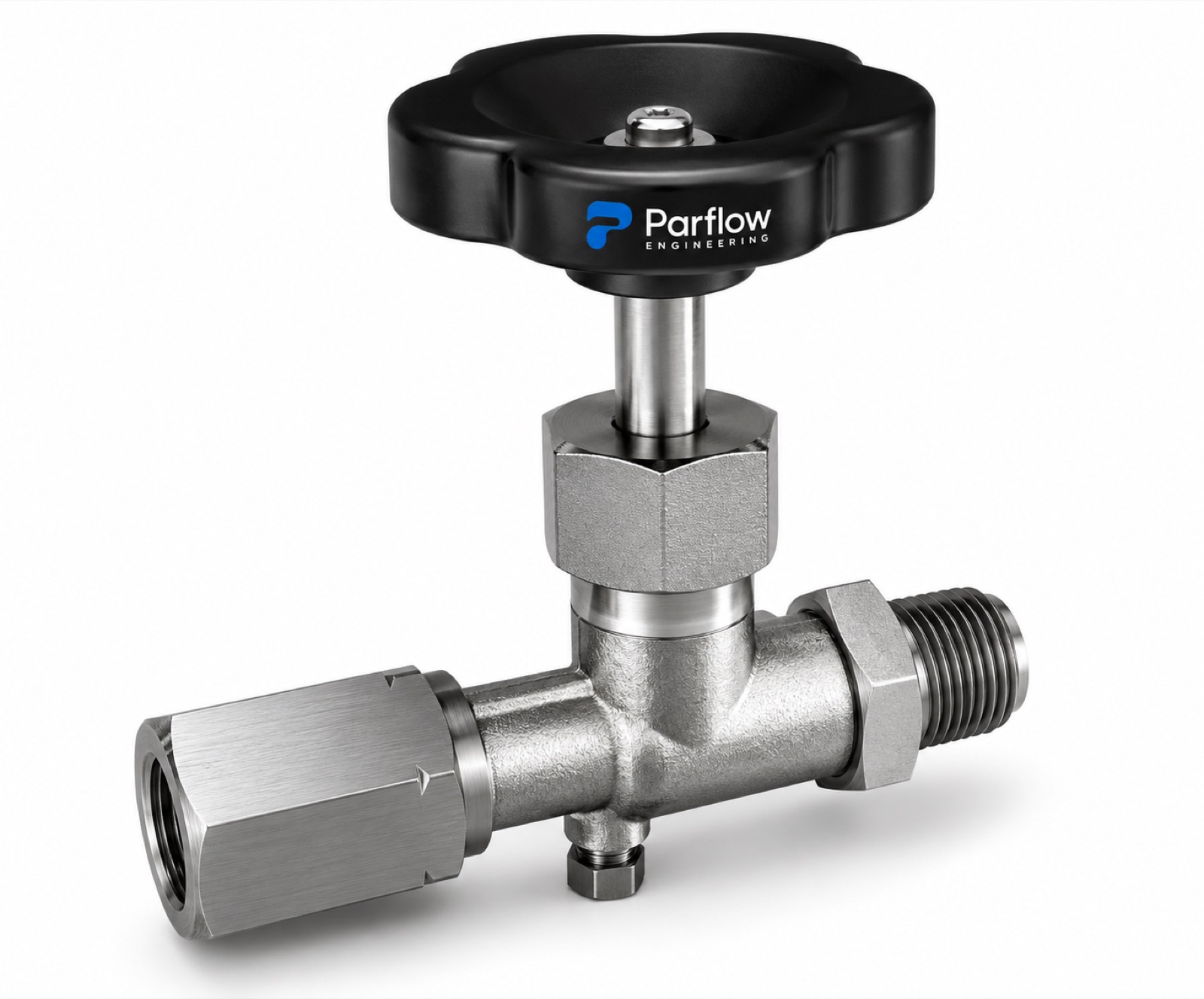
Handwheel rotation converts to precise linear stem movement through a threaded mechanism, advancing or retracting the precision-machined tip from the seat: allowing gradual pressure equalization, accurate flow regulation, and complete metal-to-metal shut-off at elevated pressures.
High-strength forged bodies give superior grain structure and fatigue resistance versus castings; precision packing arrangements keep external leak-tightness through repeated cycles.
At a glance
This is the only valve in the Parflow range whose table states both extremes outright, a 60,000 psi ceiling and a real temperature span. Everything else stops at "depends on seat or packing material".
The 60,000 psi ceiling varies by series and end connection; the 315°C top end varies by packing and seat material. Specify the pressure and the temperature together, PTFE, graphite and live-loaded packing do not cover the same part of that envelope. Hydrogen service, listed among the applications, constrains the material choice further: confirm the body alloy and packing against your hydrogen specification rather than the table maximum.
Key features
- High-strength forged body construction
- Metal-to-metal sealing for severe service
- Positive isolation and controlled regulation
- Excellent resistance to pressure cycling and thermal fluctuation
- Smooth multi-turn operation for safe equalization
- Compact for high-density installations
Technical advantages
The design of a high-pressure valve must balance mechanical strength with operational precision. Excessive operating torque, uneven stress distribution, or poor sealing geometry can compromise both safety and reliability. Parflow High Pressure Valves are engineered to overcome these challenges through precision manufacturing and application-focused design. Their robust forged construction provides the strength required for elevated pressures, while precision-machined sealing components maintain dependable shut-off throughout repeated operating cycles.
The multi-turn operating mechanism enables controlled opening and closing, allowing operators to safely manage pressure equalization and reduce sudden pressure surges within the system. The compact body design also simplifies installation in confined spaces commonly encountered on process skids, analyzer panels, offshore installations, and hydraulic systems. For maintenance personnel, the valves provide dependable operation with minimal servicing requirements, contributing to improved plant availability and reduced lifecycle costs.
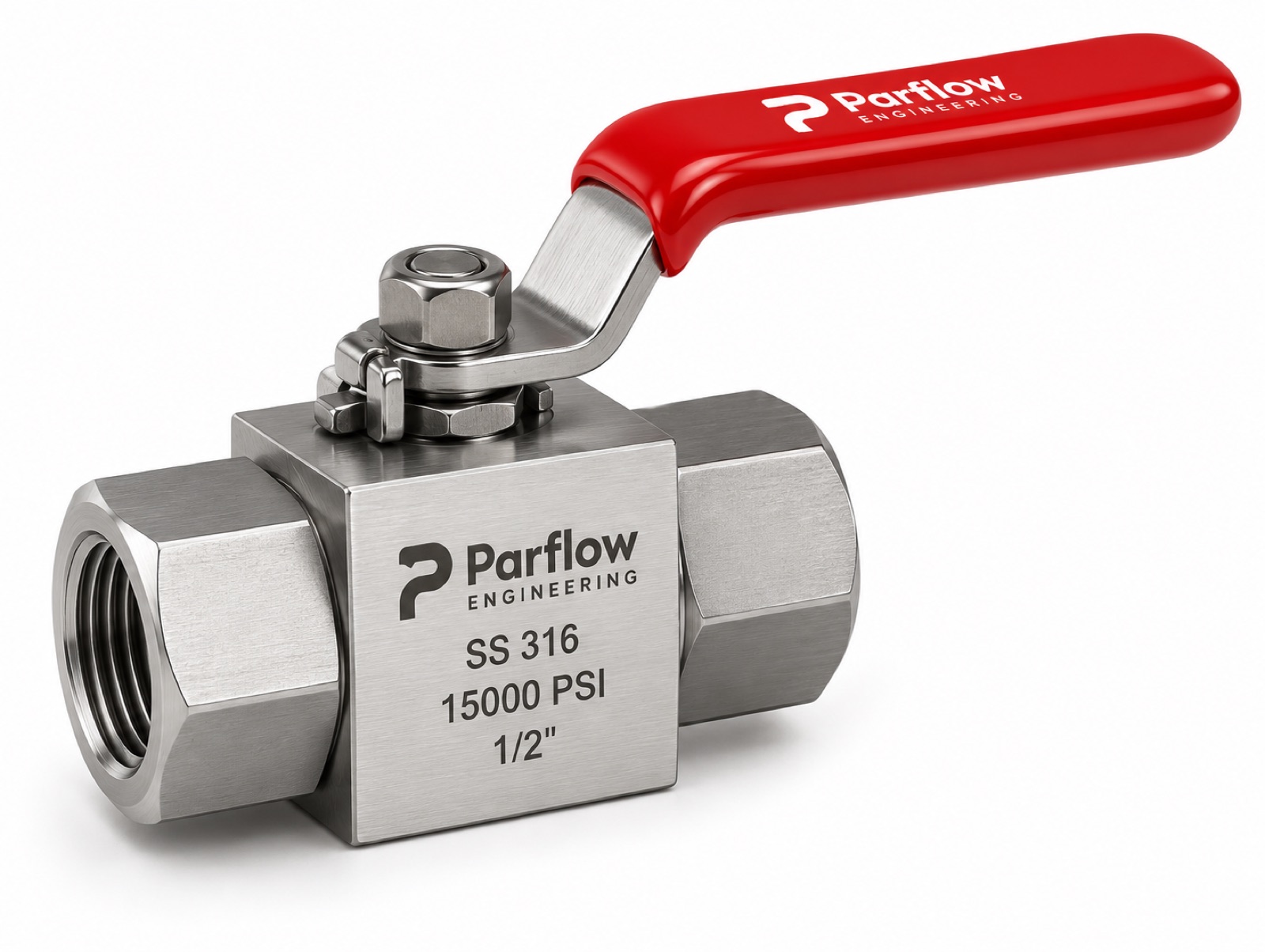
Applications
- High-pressure hydraulic systems
- Chemical injection skids
- Wellhead instrumentation
- Hydrostatic & pressure test systems
- Hydrogen applications
- Gas distribution systems
- Offshore production systems
- Research & laboratory pressure systems
Configurations
- Range of pressure ratings and valve patterns with tube fitting
- threaded
- socket weld
other industry-standard end connections for high-pressure instrumentation and hydraulic circuits.
Industries served
- Oil & Gas
- Petrochemical
- Refining
- Chemical Processing
- LNG & Industrial Gas
- Hydrogen Energy
- Offshore Production
- Power Generation
- Mining & Metals
- Research & Testing
Why choose Parflow
High-pressure systems demand uncompromising reliability. Every valve must withstand substantial mechanical loads while providing accurate control, dependable isolation, and long-term sealing performance. Failure is not simply an operational issue, it is a safety concern. Parflow High Pressure Valves are engineered with this responsibility at their core. By combining forged construction, precision machining, and proven valve engineering, they provide a robust solution for severe-service applications where pressure, reliability, and safety converge.
Their compact design, dependable operation, and compatibility with modern instrumentation practices make them a trusted choice for engineers designing high-integrity fluid and gas systems. Whether protecting critical process equipment, controlling high-pressure media, or isolating instrumentation in demanding environments, Parflow High Pressure Valves deliver the performance and confidence expected from premium industrial flow control solutions.
FAQ
Why forged bodies?
Forging gives superior mechanical strength, refined grain structure, and better fatigue resistance than cast construction, essential where elevated pressures and cycling load the body continuously.
Why multi-turn rather than quarter-turn at high pressure?
Gradual stem movement lets operators equalize pressure and open against high differentials without hydraulic shock: safer commissioning, maintenance, and control of pressurized systems.