
Overview
Parflow High Pressure Tube Fittings are designed for applications where conventional instrumentation fittings are no longer sufficient. Engineered to withstand elevated operating pressures while maintaining leak-tight performance, these fittings provide secure tube connections for critical fluid and gas systems operating under severe service conditions. From high-pressure hydraulic circuits and chemical injection systems to test benches and process instrumentation, Parflow High Pressure Tube Fittings are built to deliver exceptional mechanical integrity where safety, reliability, and performance are paramount.
High-pressure systems present engineering challenges that extend beyond simply containing pressure. Increased internal forces place significant stresses on tubing, fittings, and sealing interfaces, making connection integrity one of the most critical aspects of system design. A poorly engineered fitting can become the weakest point in the system, leading to leakage, equipment damage, inaccurate process measurements, unplanned downtime, or serious safety hazards.
Parflow High Pressure Tube Fittings are developed to address these challenges through precision manufacturing, robust construction, and proven compression technology. Their design ensures dependable sealing performance while resisting the effects of pressure cycling, vibration, thermal fluctuations, and demanding industrial environments. Whether installed in process plants, offshore facilities, hydraulic power systems, analytical laboratories, or industrial testing equipment, Parflow High Pressure Tube Fittings provide engineers with confidence that every connection performs reliably under high operating loads.
Working principle
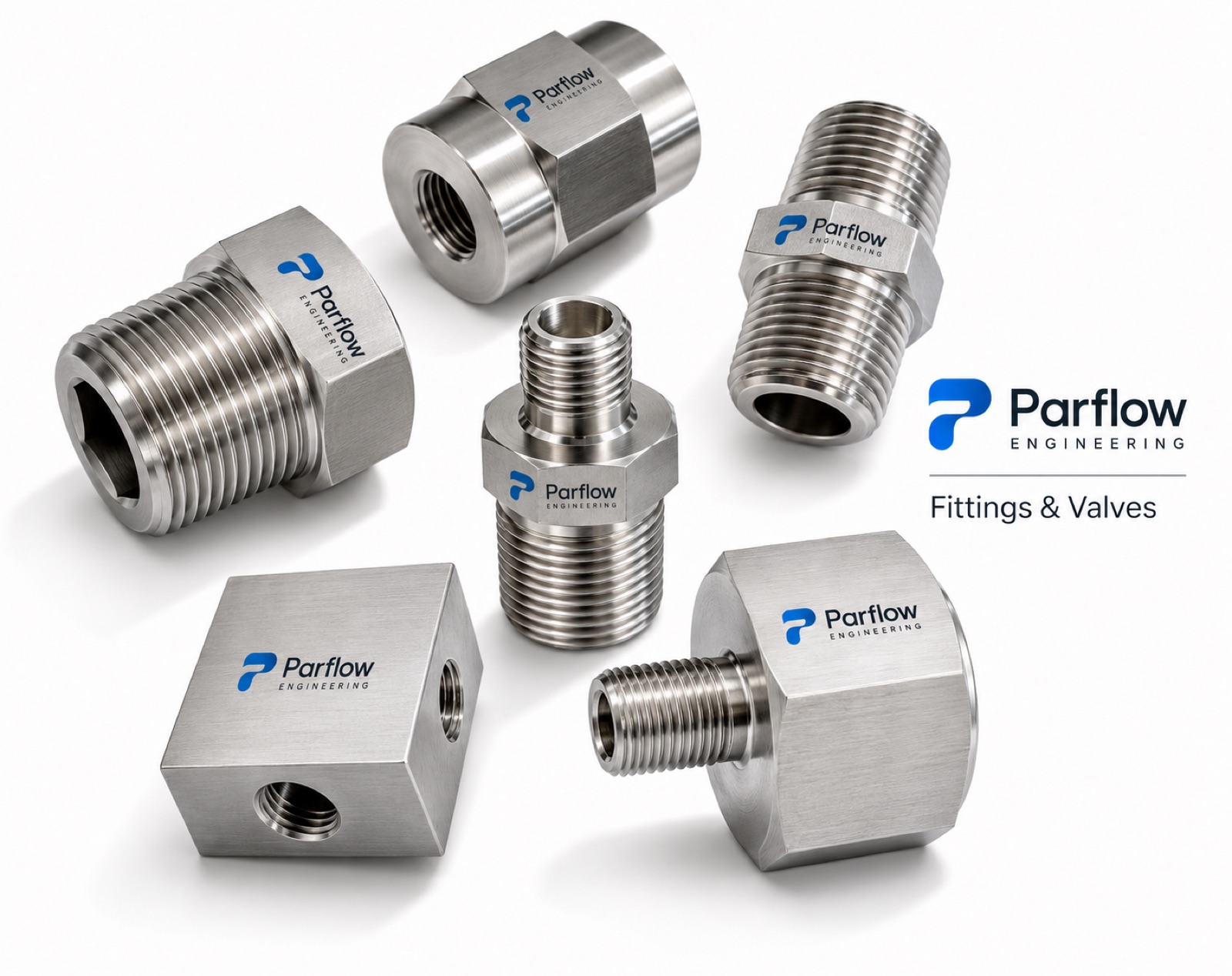
The ferrule system advances within the body under controlled torque, generating radial and axial compression around the tube. The sealing element forms a high-integrity metal-to-metal seal while the gripping mechanism anchors the tube against pressure-driven pull-out, vibration, and external loading.
Sealing loads stay evenly distributed around the tube circumference, so deformation is controlled, protecting the tubing while maximising sealing reliability. No elastomers or thread compounds, so the fittings suit high temperatures, aggressive media, and long service intervals.
At a glance
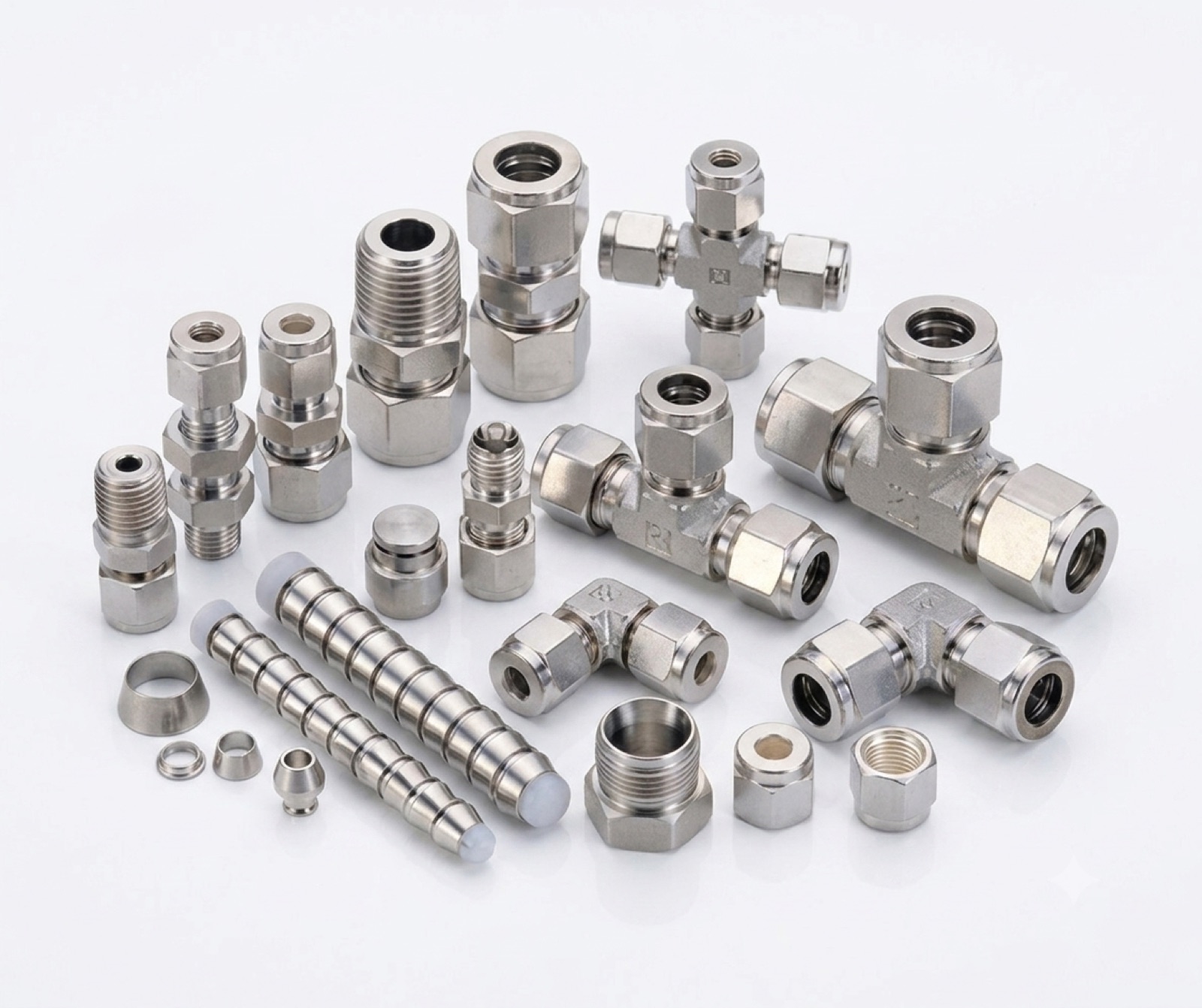
These fittings sit an order of magnitude above the instrumentation range: 60,000 psi where most of the Parflow catalogue tops out at 6,000.
The size range narrows as the pressure climbs, three tube sizes, not a general-purpose spread.
The specification states no temperature range for this product, it depends on material selection across 316 stainless steel, alloy steel, duplex, and high-strength alloys. Fix the metallurgy for your service temperature first, then confirm the pressure rating for that size and configuration; 60,000 psi is the ceiling of the family, not a figure every size carries.
Key features
- Designed specifically for high-pressure instrumentation and process systems
- High resistance to vibration, pulsation, and cyclic loading
- Secure tube retention under elevated operating pressures
- Metal-to-metal sealing: no welding or thread sealants
- Repeatable assembly from precision-machined components
- Liquid, gas, hydraulic, and pneumatic service
Technical advantages
High-pressure instrumentation systems demand far greater connection reliability than conventional piping installations. Even small connection failures can result in significant safety risks, production losses, and equipment damage. Parflow High Pressure Tube Fittings are engineered to minimize these risks through controlled compression sealing and precision mechanical design. The fitting geometry distributes stresses efficiently throughout the assembly, reducing localized loading that can contribute to fatigue or leakage over time.
The metal-to-metal sealing mechanism provides dependable long-term performance without reliance on elastomeric sealing elements that may degrade under aggressive operating conditions. This contributes to improved reliability in applications involving elevated temperatures, pressure cycling, corrosive process media, and extended maintenance intervals. The fittings also simplify installation compared with welded connections, reducing fabrication time while allowing easier inspection, maintenance, and future system modifications.
Applications
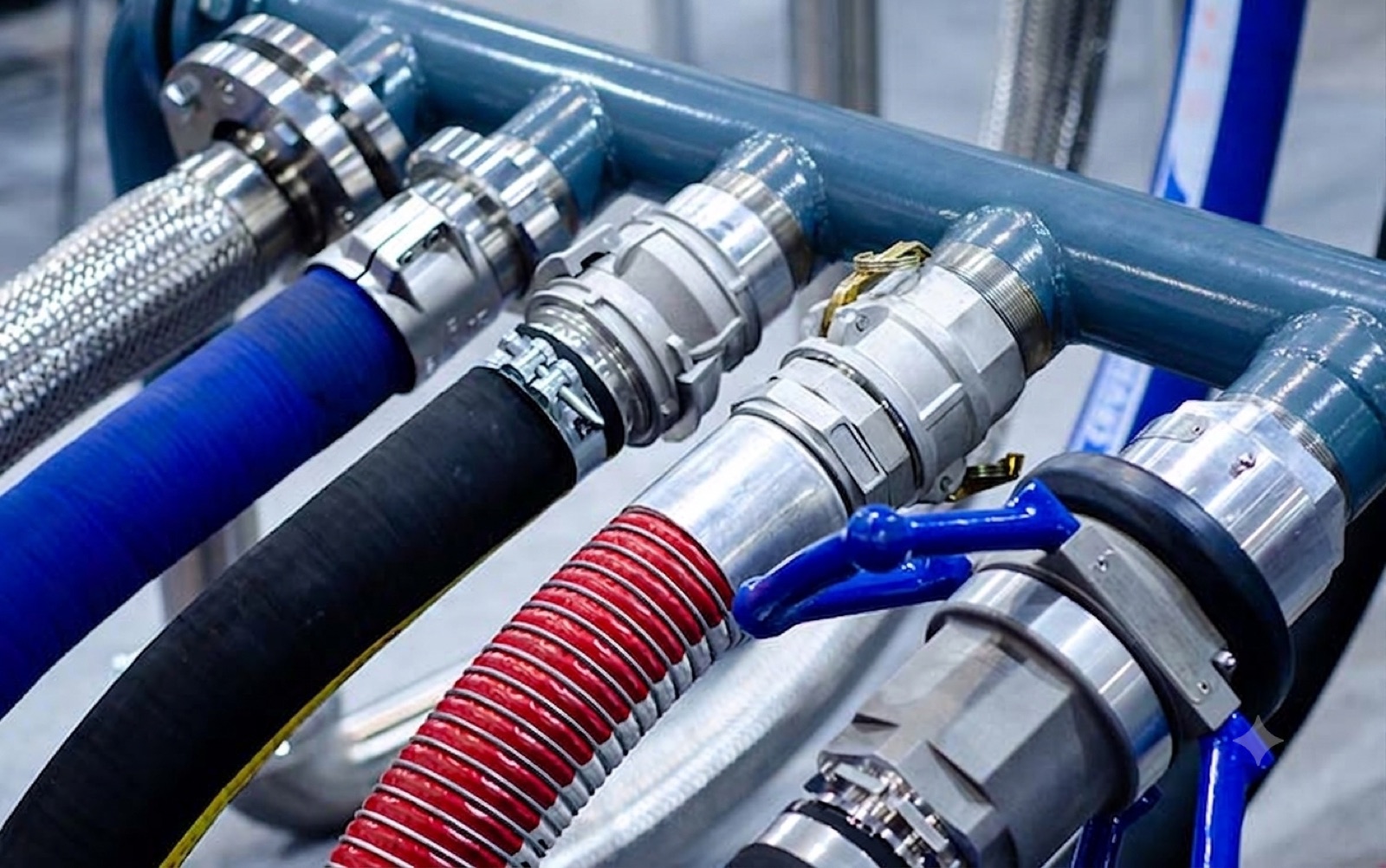
- High-pressure hydraulic systems
- Chemical injection skids
- Wellhead instrumentation
- Pressure testing & calibration equipment
- High-pressure sampling systems
- Offshore instrumentation systems
- Compressor packages
- OEM high-pressure equipment
Configurations
- Straight fittings
- elbows
- tees
- crosses
- unions
- bulkhead fittings
- male and female connectors
- reducers
- adapters
- plugs
end connections for complete high-pressure tubing systems.
Industries served
- Oil & Gas
- Petrochemical
- Refining
- Offshore Production
- LNG & Industrial Gas
- Hydrogen Energy
- Power Generation
- Mining & Metals
- Research & Testing
Why choose Parflow
In high-pressure systems, connection reliability is fundamental to operational safety and process performance. Every fitting must maintain sealing integrity while resisting the mechanical forces generated by elevated pressures, vibration, and dynamic operating conditions. Parflow High Pressure Tube Fittings are engineered with these requirements at their core. Combining precision manufacturing, robust mechanical construction, and proven compression technology, they provide dependable performance for critical instrumentation and fluid handling systems.
Their compatibility with industry-standard instrumentation practices makes them an ideal choice for new installations, plant upgrades, OEM equipment, and maintenance projects where reliable, leak-tight connections are essential to safe and efficient operation.
FAQ
What makes a fitting 'high pressure'?
Robust body construction, precision ferrule geometry, and load distribution engineered for elevated internal forces: so the fitting maintains sealing and tube retention where pressure, pulsation, and vibration would fatigue standard fittings.
Are elastomer seals used?
No, sealing is achieved by precision mechanical compression, metal to metal. That keeps the fittings suitable for high temperatures, aggressive chemicals, and long service intervals.
Typical applications?
Chemical injection, wellhead instrumentation, hydraulic power, hydrostatic and pressure test benches, high-pressure sampling, and offshore instrumentation systems.