
Overview
Parflow Check Valves are engineered to provide automatic, maintenance-friendly protection against reverse flow in instrumentation and process systems. Designed to operate without manual intervention, these valves allow fluid or gas to flow freely in the intended direction while instantly preventing reverse flow whenever system pressure changes. By protecting sensitive instruments, pumps, compressors, analyzers, and process equipment from backflow, Parflow Check Valves play a critical role in maintaining system integrity, operational safety, and process reliability.
In industrial fluid systems, flow reversal can occur due to pressure fluctuations, pump shutdowns, equipment failure, or changes in process conditions. Uncontrolled reverse flow can contaminate process media, damage instrumentation, affect measurement accuracy, reduce equipment life, and create serious operational or safety concerns. A properly designed check valve eliminates these risks by functioning as an automatic safeguard that continuously protects the system without requiring operator input.
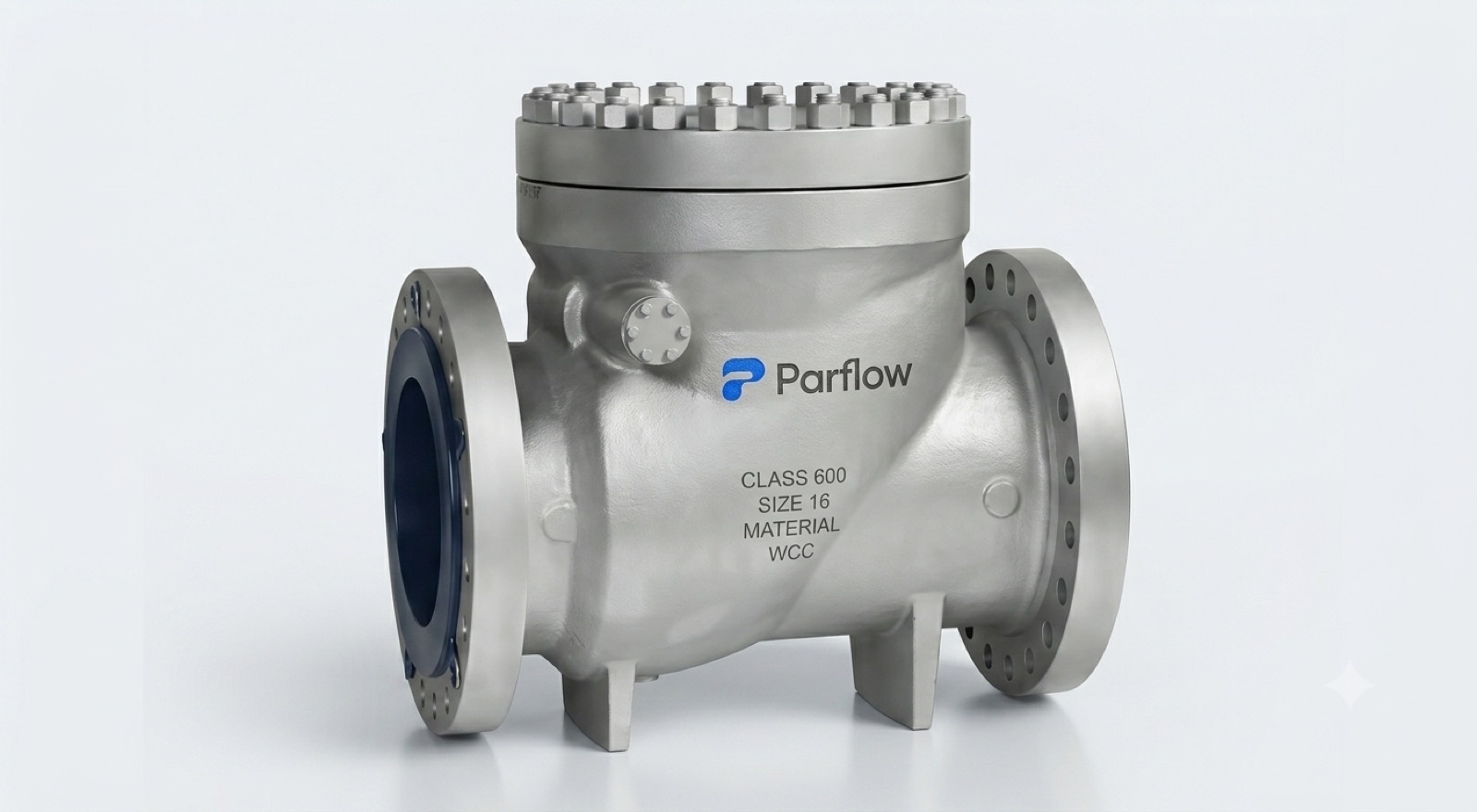
Working principle
A movable sealing element (poppet or ball) is held against the seat by spring force or downstream pressure. When upstream pressure exceeds the cracking pressure, the element lifts and forward flow passes with minimal restriction.
If pressure equalizes or reverses, the element reseats immediately, closing the path. Spring-assisted designs are tuned for rapid closure and consistent cracking pressure across varying process conditions.
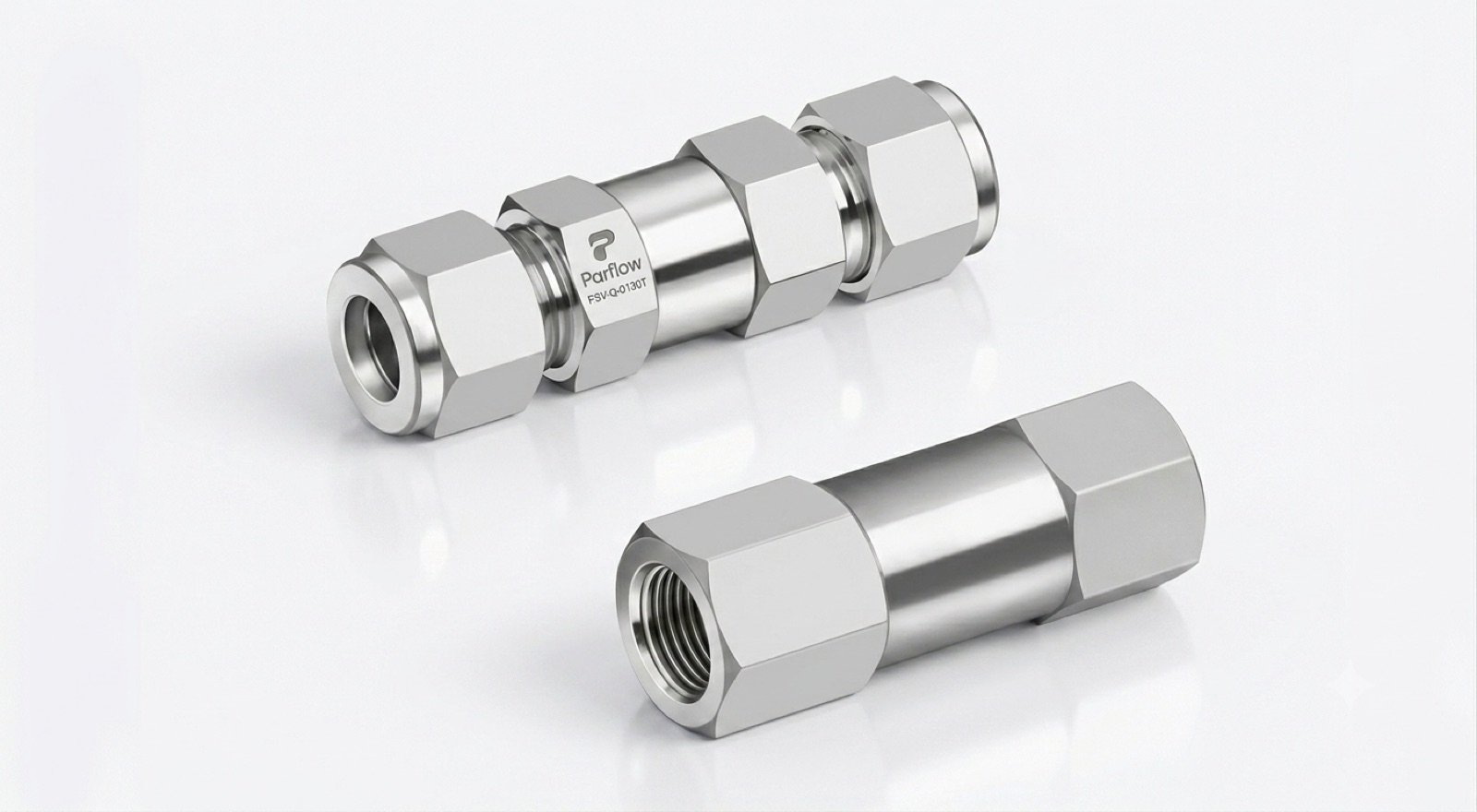
At a glance
Cracking pressure is the one number you configure on this valve: the forward differential needed to lift the poppet off its seat. Five standard settings span a 75:1 range, so the choice is not a fine adjustment, it is a decision about what the valve ignores.
The bars are on a true linear scale, which is the point: 1/3 and 1 psi barely register next to 25 psi. The low settings are near-free-flow checks that close on reversal and little else, right for impulse lines and transmitter takeoffs, where any real cracking pressure would offset the reading. The 10 and 25 psi settings hold against a standing back-pressure, so they suit pump and compressor discharge. Set it above the back-pressure the valve must hold closed, and no higher.
Key features
- Automatic one-way flow control: no manual operation
- Fast response to pressure changes
- Precision-machined sealing components
- Smooth forward flow, minimal pressure loss
- Compact for instrumentation and process installations
- Gas, liquid, hydraulic, and pneumatic systems
Technical advantages
Backflow is often an overlooked cause of equipment failure, process instability, and maintenance issues. A properly selected check valve provides continuous protection without increasing operational complexity. Parflow Check Valves help safeguard pumps, compressors, transmitters, analyzers, sampling systems, and other sensitive equipment by ensuring that process media flows only in the intended direction.
This reduces the risk of contamination, pressure shocks, inaccurate measurements, and equipment damage. Because operation is entirely automatic, check valves require no manual intervention during normal plant operation. Their simple mechanical design also contributes to long service life and reduced maintenance requirements compared with actively controlled flow devices. The compact design enables easy installation in new systems as well as retrofit projects where reliable backflow prevention is required without increasing system complexity.
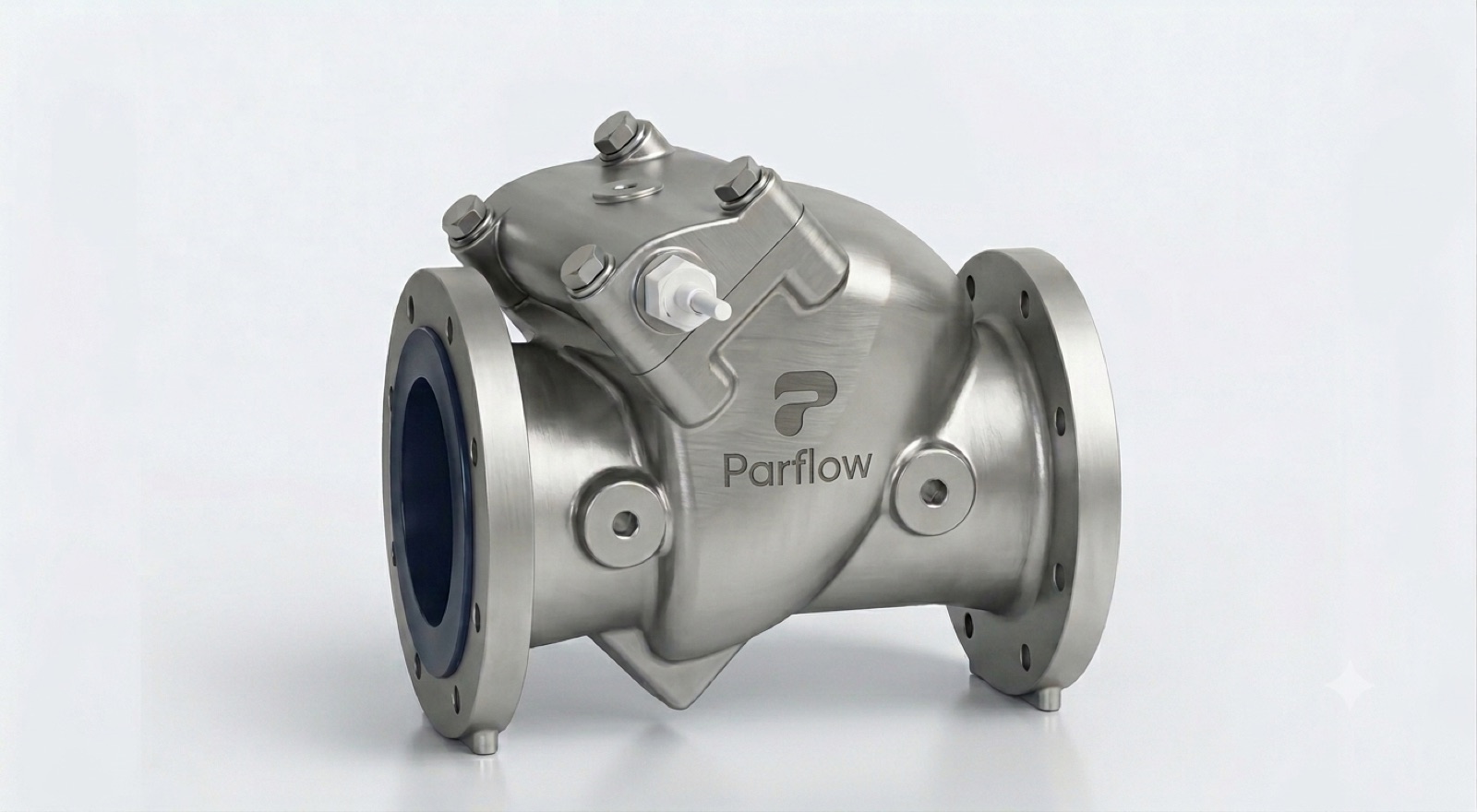
Applications
- Instrumentation impulse lines
- Pressure transmitter installations
- Pump & compressor discharge lines
- Chemical injection skids
- Sampling systems & analyzers
- Gas distribution networks
- Calibration equipment
- OEM process equipment
Configurations
- Multiple connection styles and body patterns for tube fitting systems
- threaded piping
- hydraulic circuits
- pneumatic systems
- OEM equipment
- in various installation orientations
Industries served
- Oil & Gas
- Petrochemical
- Chemical Processing
- Refining
- Power Generation
- Water & Wastewater
- Pharmaceutical
- Food & Beverage
- LNG & Industrial Gas
- Marine & Offshore
Why choose Parflow
Reliable process control depends not only on managing flow but also on preventing it from moving where it should not. Reverse flow can compromise equipment, contaminate process media, reduce measurement accuracy, and create unnecessary maintenance challenges. Parflow Check Valves are engineered to provide dependable, automatic protection against these risks. Combining precision manufacturing, proven one-way flow technology, and robust mechanical construction, they deliver consistent backflow prevention without operator intervention.
Whether protecting instrumentation, hydraulic systems, process equipment, or utility services, Parflow Check Valves provide engineers with a reliable solution that enhances system safety, operational efficiency, and long-term process reliability. Designed to integrate seamlessly into modern industrial fluid systems, Parflow Check Valves represent an essential component in achieving safe, efficient, and uninterrupted plant operation.
FAQ
What is cracking pressure?
The minimum upstream pressure at which the check valve's sealing element lifts off its seat and forward flow begins. Below it, or on reversal, the valve stays closed.
Why fit a check valve on instrument lines?
Flow reversal from pressure fluctuations, pump shutdowns, or process upsets can contaminate media, damage instruments, and distort measurements. A check valve blocks reverse flow automatically, continuously, with no operator input.