
Overview
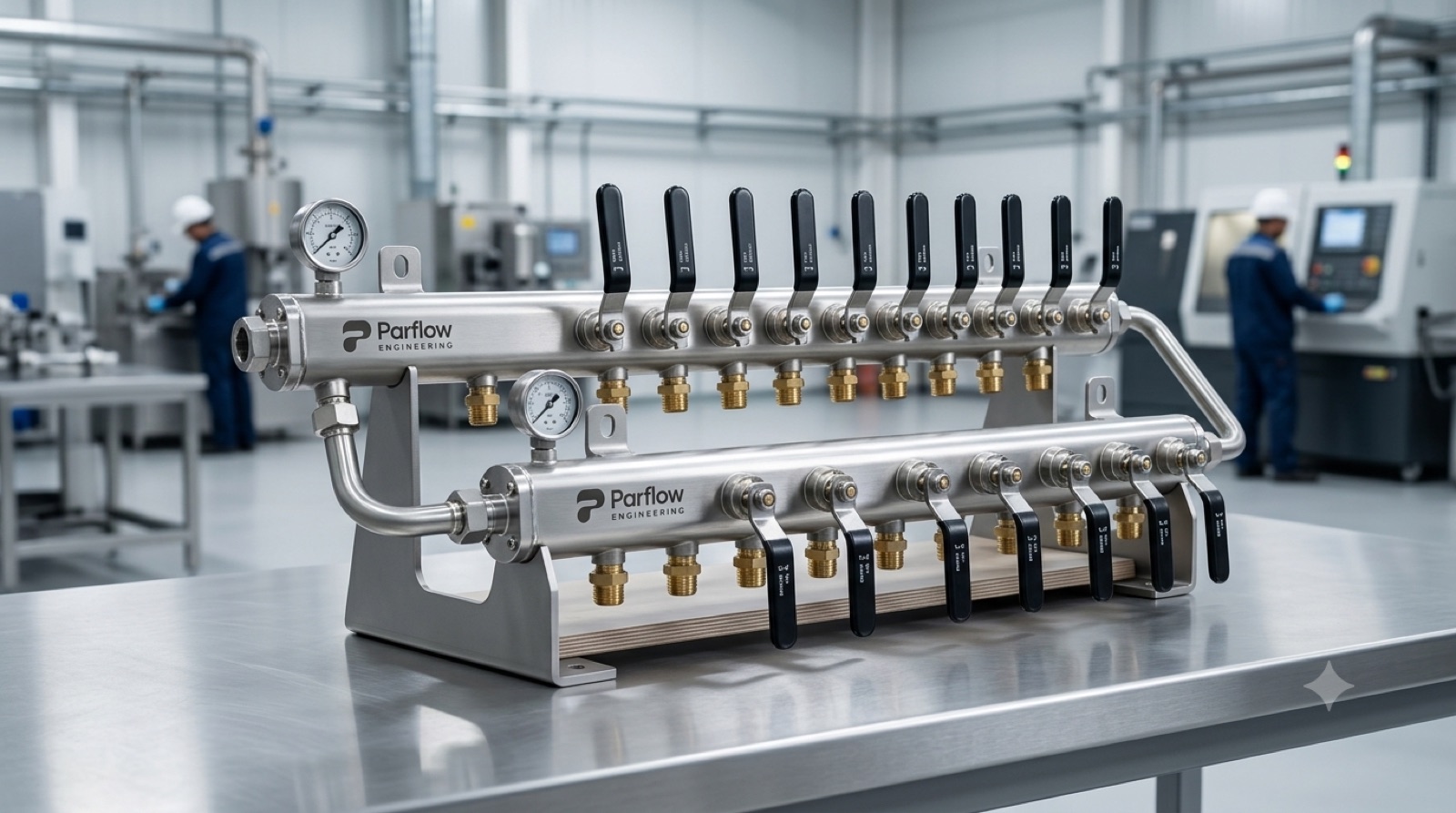
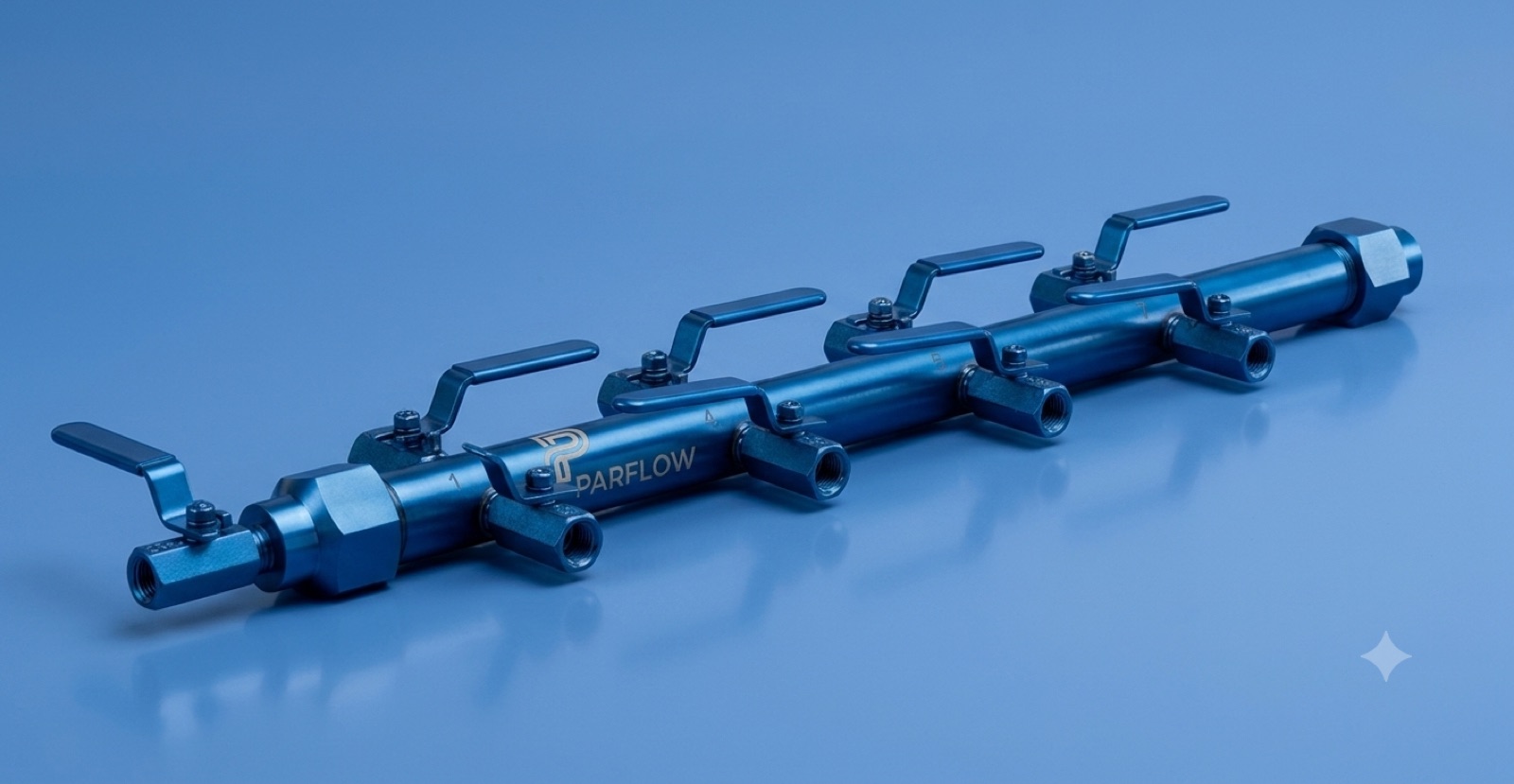
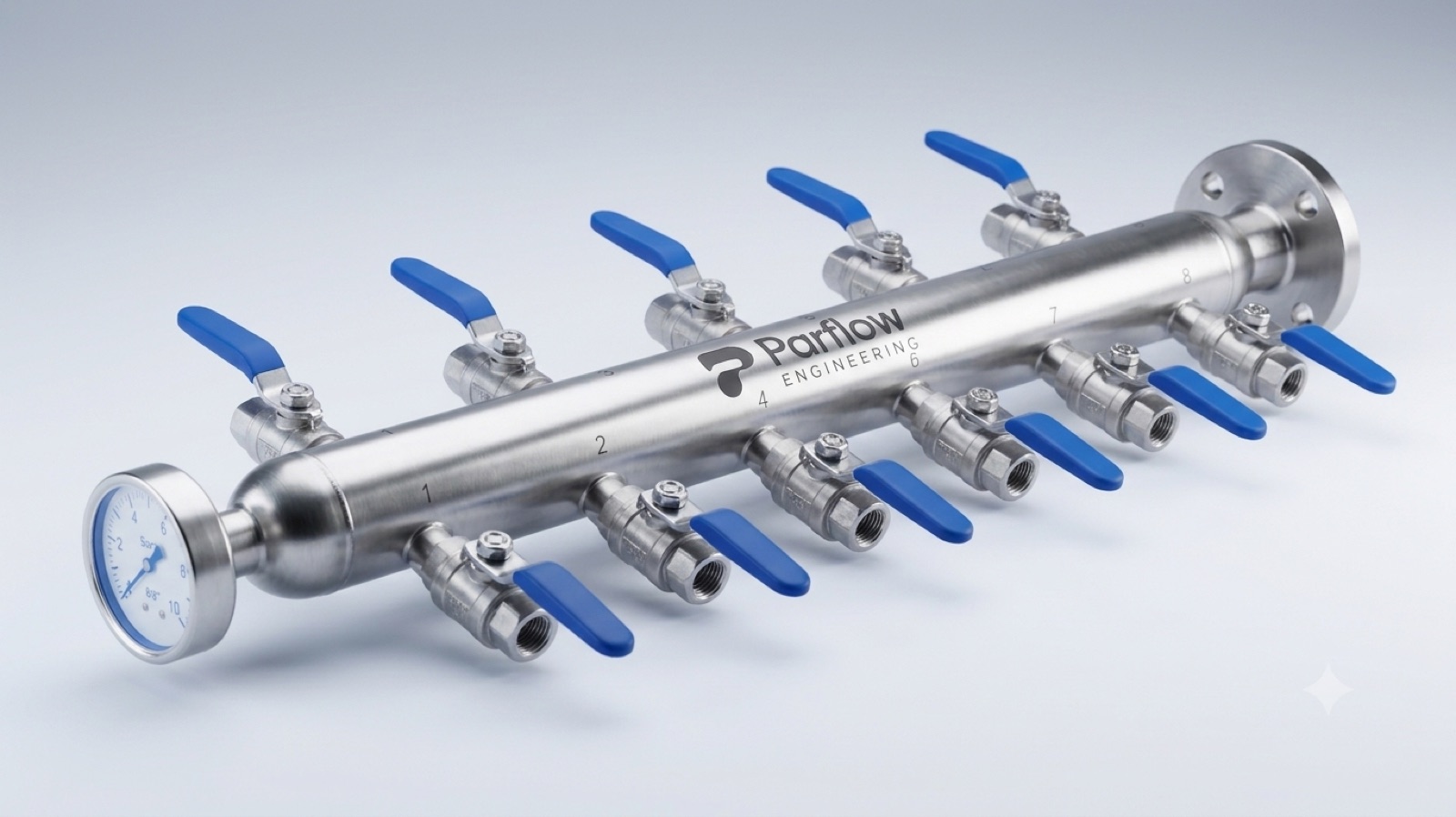
Parflow Air Headers are engineered to provide safe, organized, and efficient distribution of compressed air and inert gases throughout industrial instrumentation systems. Acting as a centralized distribution manifold, an air header receives air from a single supply source and distributes it to multiple downstream users while maintaining system integrity, operational reliability, and ease of maintenance.
Instrument air is often referred to as the "lifeblood" of modern process automation. Pneumatically actuated control valves, positioners, air-operated instruments, analyzers, and various automation devices all depend on a clean, stable, and uninterrupted air supply for accurate operation. Any interruption, contamination, or pressure fluctuation within the distribution network can affect instrument performance, compromise process control, and ultimately impact plant productivity.
Parflow Air Headers are designed to simplify pneumatic distribution by consolidating multiple branch connections into one robust, precision-manufactured assembly. Their compact construction, configurable outlet arrangements, and high-integrity design make them an essential component in process plants where reliability, accessibility, and efficient air management are critical. The Foundation of Reliable Pneumatic Systems Compressed air distribution within industrial facilities extends far beyond simply supplying air to equipment.
Modern plants require distribution systems that maintain consistent pressure, minimize leakage, simplify maintenance, and provide flexibility for future expansion. Traditionally, creating multiple branch connections required extensive piping assemblies using numerous tees, couplings, and threaded fittings. While functional, these arrangements increase installation time, occupy valuable space, and introduce additional potential leak points.
Parflow Air Headers replace these complex assemblies with a single integrated distribution manifold. By reducing the number of individual piping connections, they create a cleaner installation while improving mechanical integrity and simplifying system maintenance. The result is a more organized pneumatic distribution network that supports efficient plant operation while reducing installation complexity.
Working principle
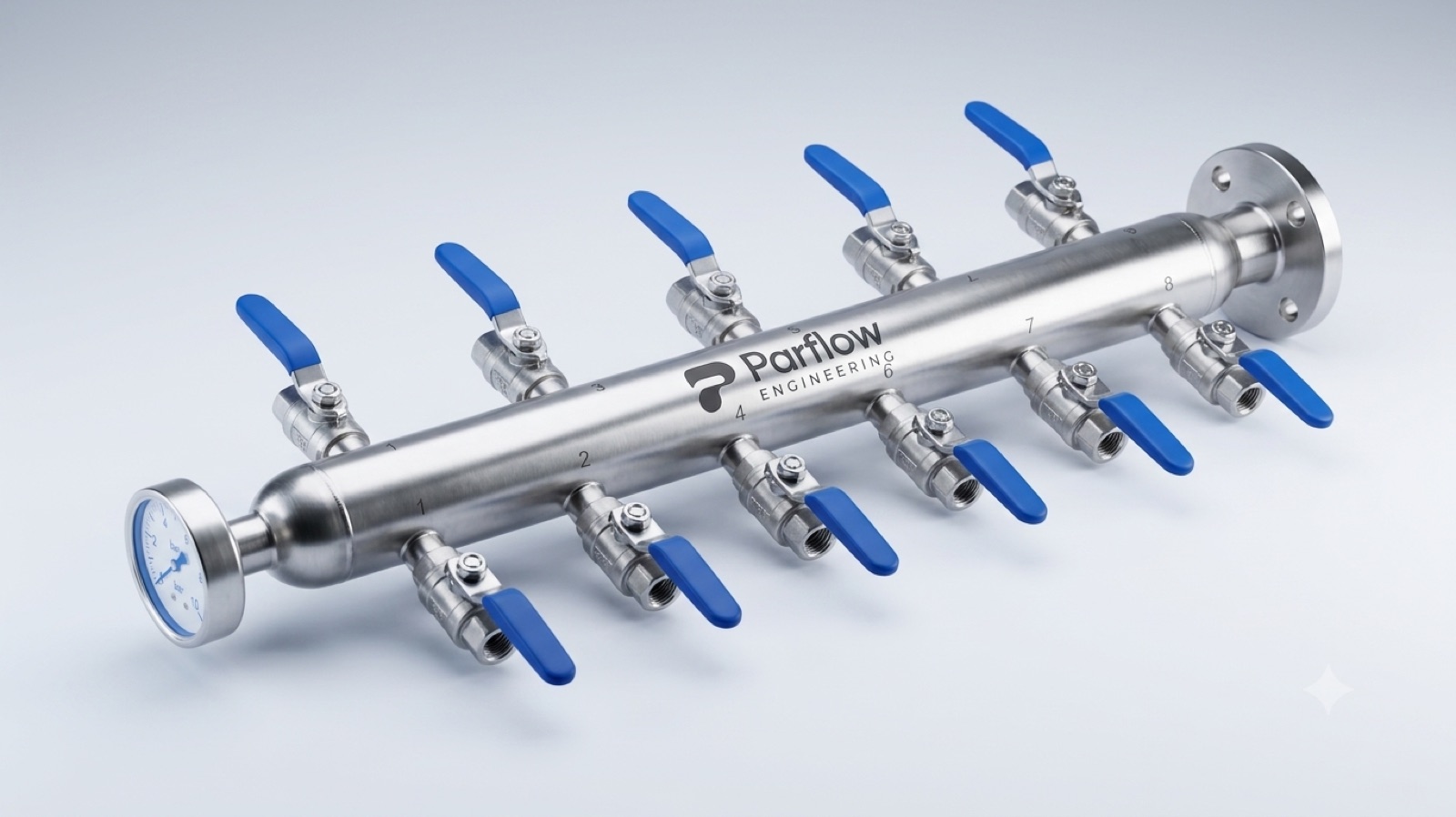
Air enters through the primary inlet into an internal chamber that acts as a common distribution passage, feeding all outlet ports along the header uniformly. Each outlet independently supplies an instrument, actuator, or panel; unused ports stay plugged for future expansion or carry isolation valves for per-branch maintenance.
The single machined body replaces many individual branch joints: better leak integrity, less installation labour, and simpler troubleshooting per branch.
At a glance
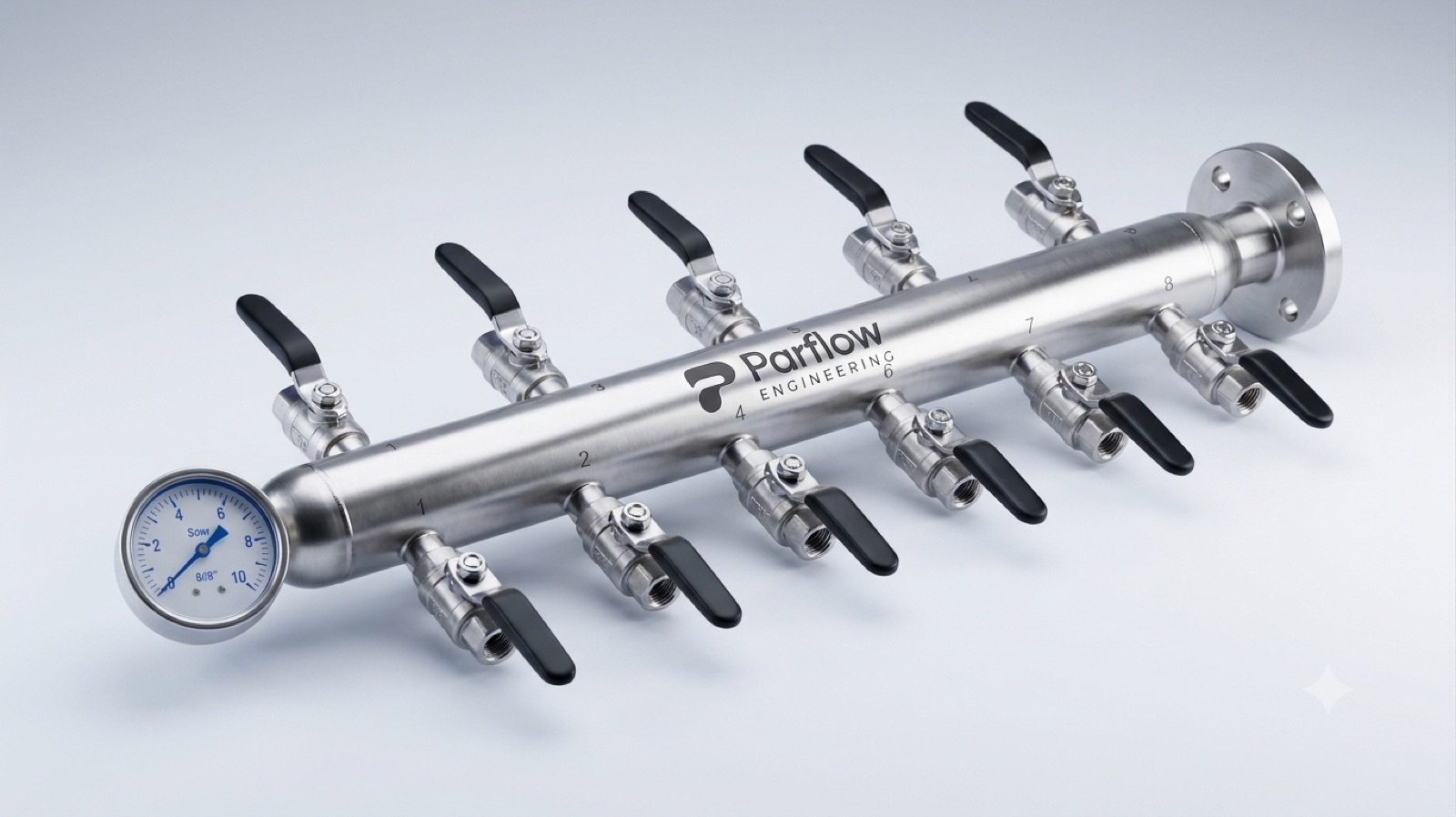
An air header is sized by how many instruments it feeds, not by tube or thread size. Two numbers set the part: header bore and outlet count.
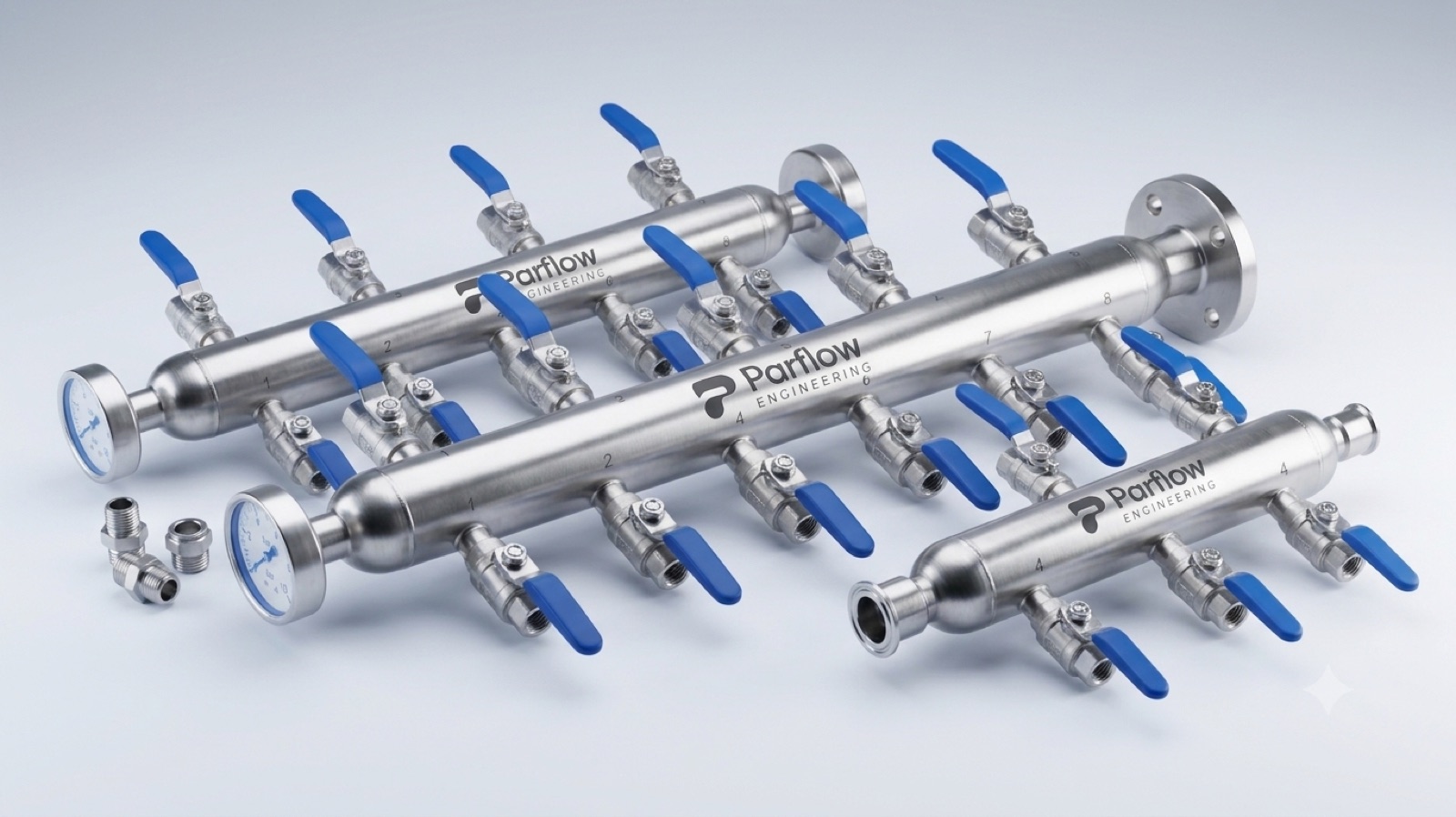
Standard headers carry 2 to 20 outlet ports, or as specified. Count the instruments on the skid, add the spares you expect to commission later, and specify the port count first, bore and end connection follow from it. Custom header sizes are available outside the four standard bores.
The -40°C floor is 14°C warmer than the rest of the stated-range products, check it against your minimum ambient before specifying for outdoor cold service.
Key features
- One inlet, multiple independently usable outlets
- Compact, space-efficient manifold construction
- Fewer threaded joints: better leak integrity
- Expandable outlet configurations
- Indoor and outdoor industrial environments
- Optional per-outlet isolation valves and drains
Technical advantages
One of the primary advantages of an air header is the simplification of pneumatic distribution systems. Instead of fabricating multiple branch connections using numerous fittings and pipe sections, engineers can install a single distribution manifold that provides organized air supply to multiple instruments simultaneously. This reduces installation labor, lowers material costs, and improves overall system appearance.
The reduction in piping joints contributes to improved leak integrity, helping maintain instrument air pressure while reducing compressed air losses and operating costs. Air headers also improve maintenance efficiency. Individual branches can be clearly identified, isolated where applicable, and modified without requiring extensive piping alterations. Additional outlets can often be incorporated into future system expansions without redesigning the entire distribution network.
The compact arrangement also makes troubleshooting easier, allowing maintenance personnel to quickly identify and service individual instrument connections.
Applications
- Instrument air distribution
- Valve actuator & positioner supply
- Solenoid valve panels
- Analyzer systems
- Process automation systems
- Instrumentation panels & skids
- Nitrogen distribution systems
- Utility air systems
Configurations
- Varying outlet counts
- inlet/outlet sizes
- threaded or custom end connections
- drain arrangements
- mounting brackets
- plugged spares
per-outlet isolation valves for present needs plus future expansion.
Industries served
- Oil & Gas
- Petrochemical
- Chemical Processing
- Refining
- Power Generation
- LNG & Industrial Gas
- Water & Wastewater
- Pharmaceutical
- Food & Beverage
- Pulp & Paper
Why choose Parflow
Reliable pneumatic systems begin with efficient distribution. A well-designed air header not only delivers compressed air where it is needed but also contributes to cleaner installations, easier maintenance, and improved long-term system reliability. Parflow Air Headers are engineered to provide precisely that. Combining robust construction, precision manufacturing, and flexible configuration options, they offer a dependable solution for centralized instrument air distribution across modern industrial facilities.
Their compact design reduces installation complexity, minimizes leak paths, and provides a scalable platform for future expansion, making them an ideal choice for engineers seeking reliable and efficient pneumatic infrastructure. Whether supporting a small instrumentation panel or a large process automation system, Parflow Air Headers deliver the reliability, accessibility, and performance expected from premium industrial flow and instrumentation products.
FAQ
Why use an air header instead of tee branches?
A single manifold replaces many tees, couplings, and threaded joints: faster installation, fewer leak points (which directly cuts compressed-air losses), cleaner layout, and easy future expansion from spare ports.
Can individual branches be serviced without killing supply?
Yes, outlets can be fitted with isolation valves so one branch is maintained while the header keeps feeding every other instrument.